
Opals: The Most Romantic Gemstone in Jewelry
There’s a reason people either fall in love with opals instantly or never quite forget the first one they saw.
They do not sparkle in a neat, predictable way. Instead, they flicker and glow. They change depending on the light, the angle, and even what you are wearing. One moment they appear soft and milky. The next, they flash neon green or electric blue.
Opals feel alive. That quality is exactly why they have been treasured for centuries.
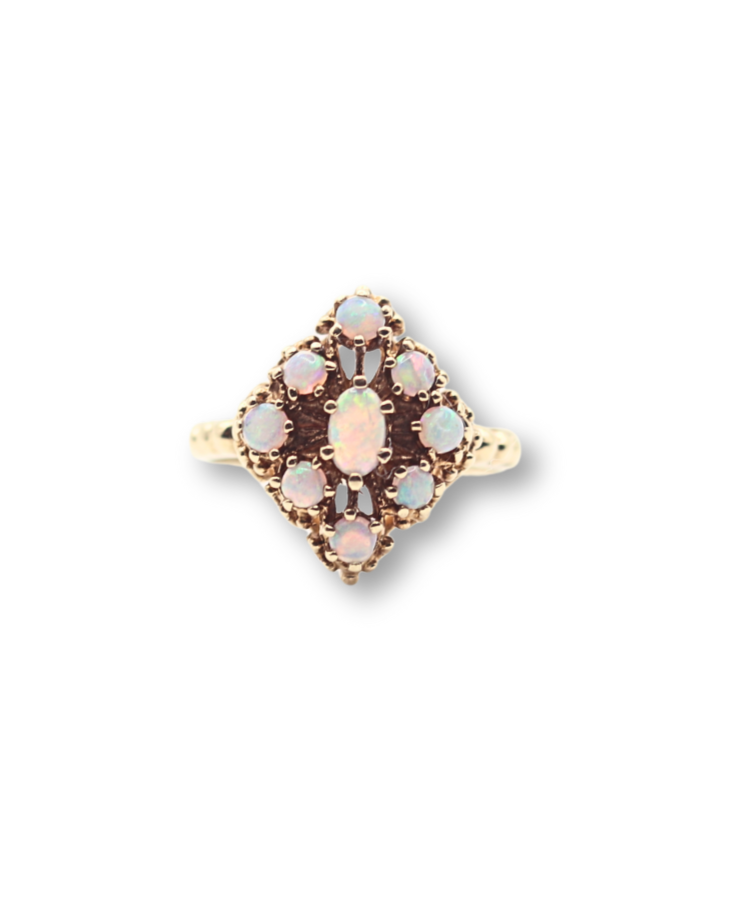
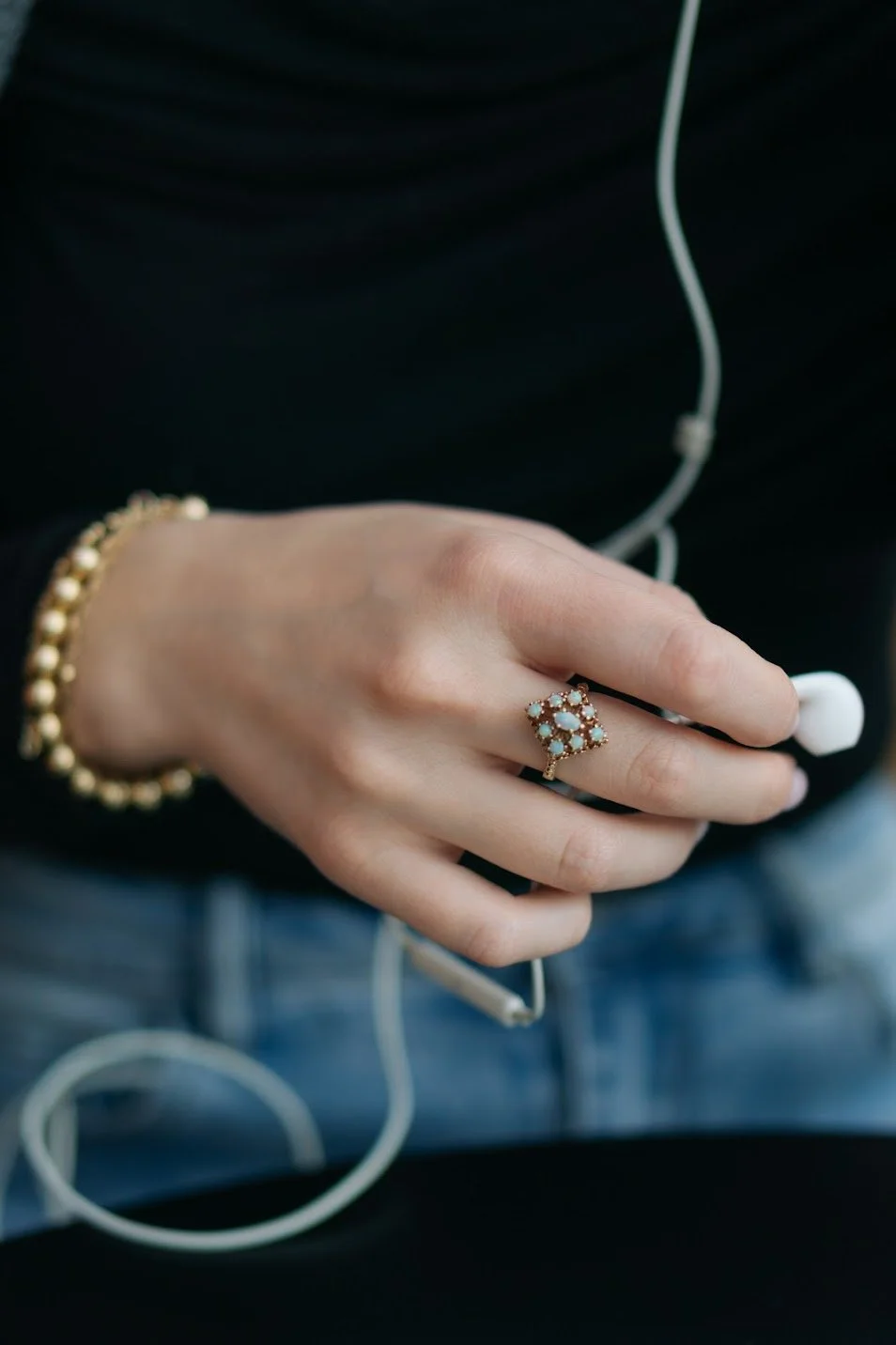
This vintage 10K yellow gold opal cluster ring features a glowing oval center opal surrounded by eight additional natural opals, arranged in a soft floral cluster. The ornate filigree gallery and airy mid-century construction give the piece an heirloom presence that feels romantic, feminine, and unmistakably vintage
One of the small oval opals has one prong missing, a common occurrence in mid-century opal settings. The ring has been professionally inspected by a qualified jeweler and confirmed to be fully secure and structurally sound. No stones are loose, and the setting remains safe for continued wear.
A Little History
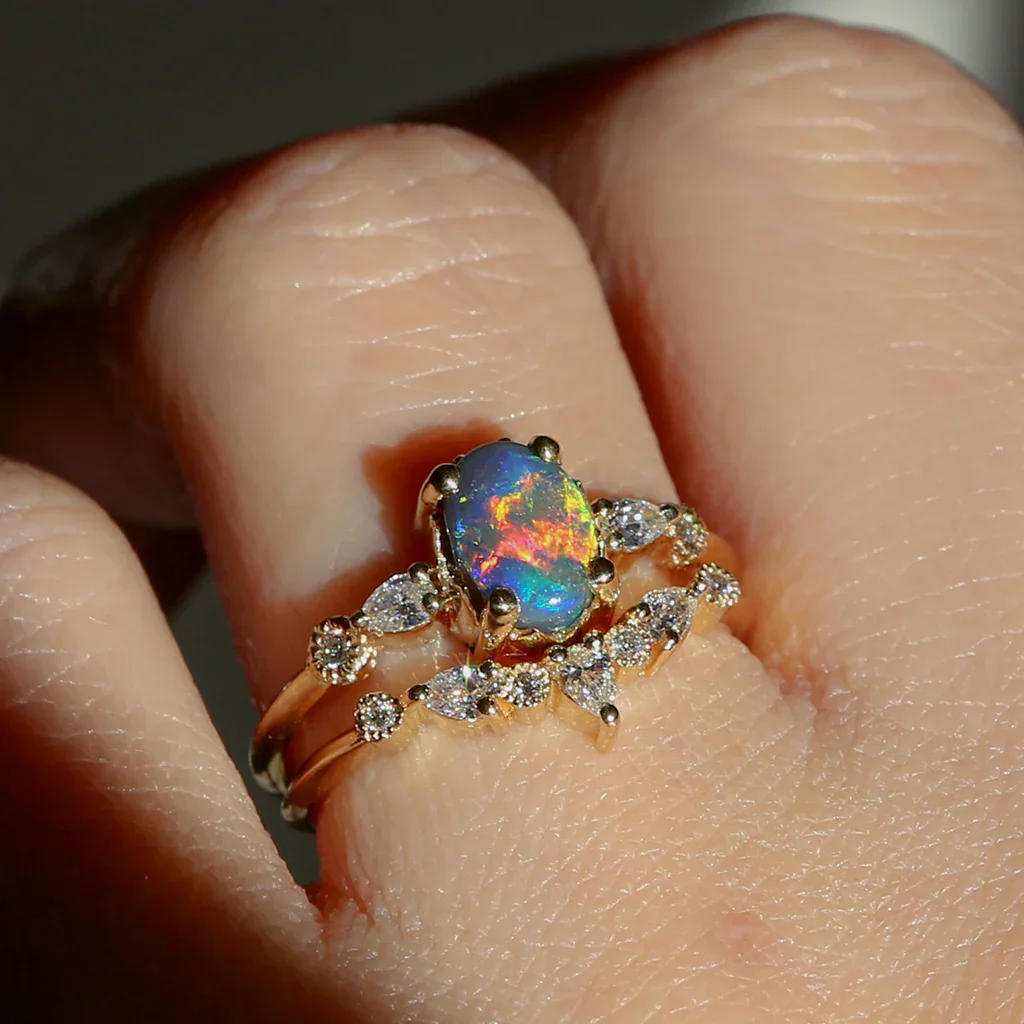
14k Opal and Diamond Ring
The ancient Romans were captivated by opals. They believed the stone symbolized hope and purity, and the name comes from the Latin word opalus, meaning “precious stone.” Greek mythology went further, suggesting opals granted foresight and protection.
In the Victorian era, opals became widely fashionable, largely because Queen Victoria adored them. Antique rings from that period often feature opals set in rich yellow gold and framed with delicate diamonds. That look still feels relevant and beautiful today.
During the Art Nouveau movement, jewelers embraced opals for their dreamlike quality. Designers paired them with flowing gold forms, enamel work, and botanical motifs. Opals suited that aesthetic perfectly. They felt romantic, slightly mysterious, and never rigid.
Like many exceptional gemstones, opals eventually cycled back into modern design.
What Makes an Opal Glow
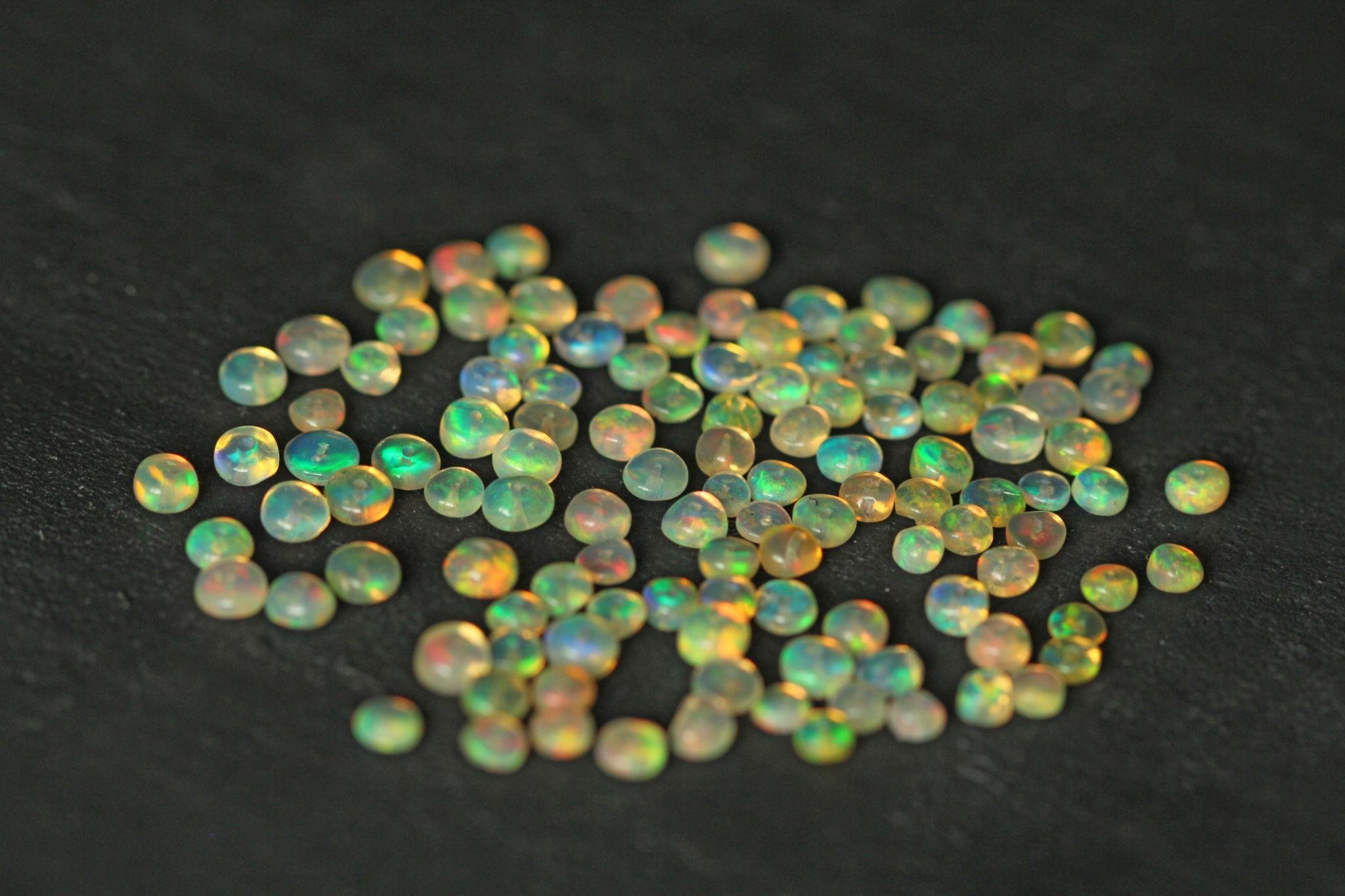
Opals are not crystalline like diamonds or sapphires. They are formed from microscopic silica spheres. When light enters the stone, it bends and scatters through those spheres. This interaction creates what is known as “play of color.”
The flash you see is not pigment. It is structure.
That is why no two opals are identical. The pattern, the fire, and the direction of color are always unique.
When you wear an opal, you are wearing something that will never exist in exactly the same way again.
The Different Types of Opals
Not all opals look alike. These are the varieties most commonly seen in fine jewelry.
White Opal
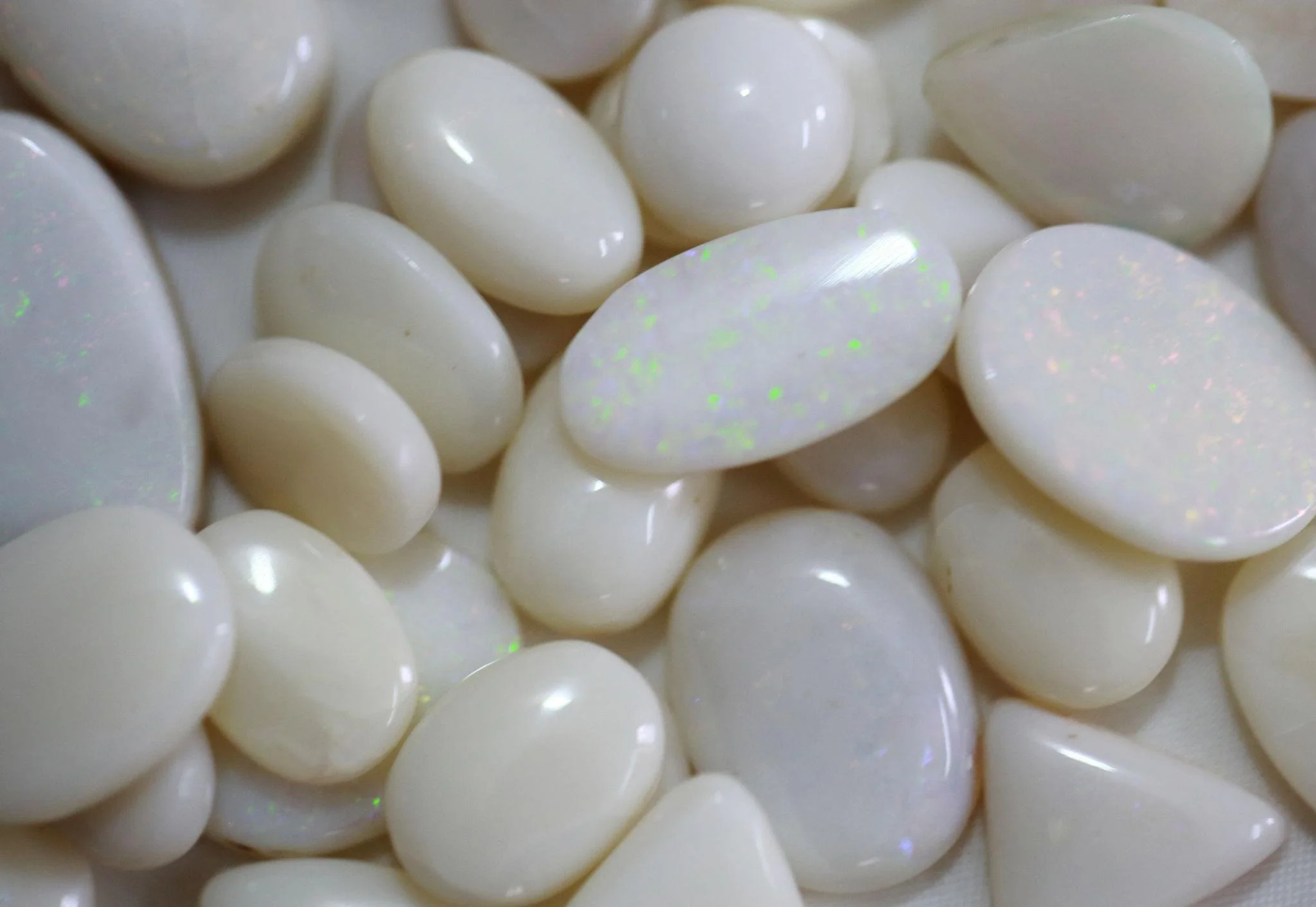
White Opal
White opals have a light or milky base tone with soft flashes of pink, blue, and green. They feel classic and romantic, especially in vintage-style gold settings.
Black Opal
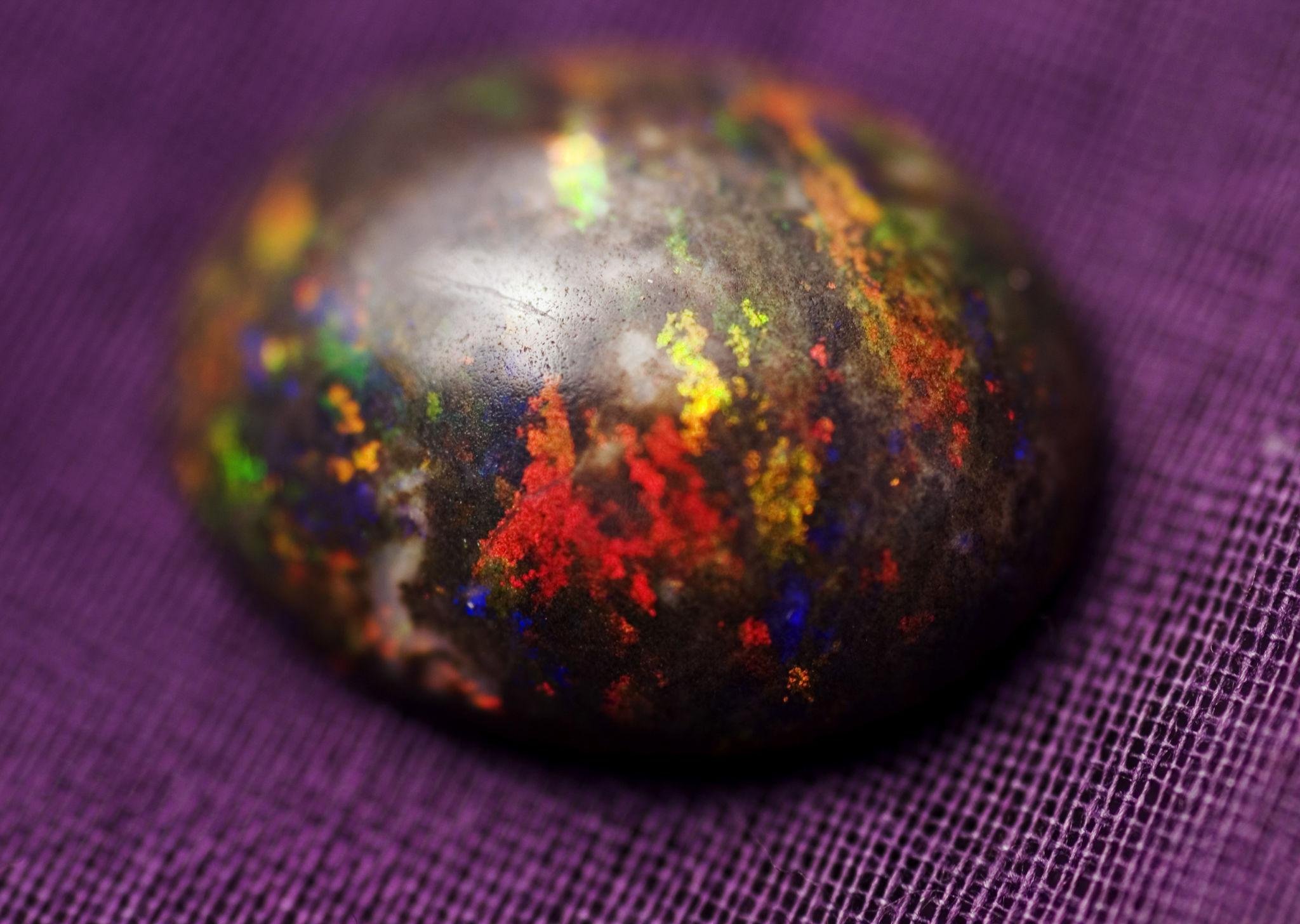
Black Opal
Black opals are the rarest and most valuable variety, typically sourced from Australia. Their darker body tone intensifies the flashes of color, making them appear bold and dramatic.
Ethiopian Opal
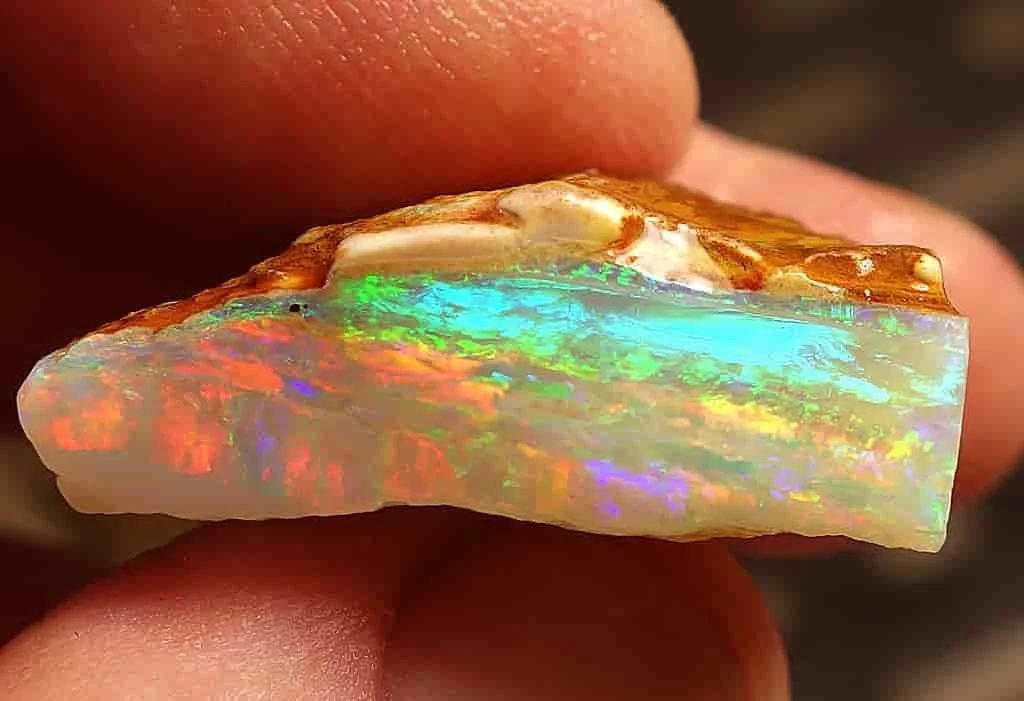
Fire Opal
Ethiopian opals are often translucent with vibrant, high-contrast fire. They have become especially popular in modern fine jewelry because of their brightness and relative accessibility.
Boulder Opal
Boulder opals form within ironstone rock and are sometimes cut with part of that host rock still attached. The result feels organic and almost landscape-like.
Fire Opal
Fire opals are usually transparent to translucent with a warm orange or red body color. They tend to glow with saturated warmth rather than display strong rainbow flashes.
Each type carries its own personality. Some feel soft and subtle. Others immediately command attention.
Are Opals Delicate
Opals are softer than diamonds and sapphires. On the Mohs scale, they rank around 5.5 to 6.5. They should not be stored loosely with harder gemstones, and they should not be exposed to harsh chemicals or ultrasonic cleaning.
That said, they are absolutely wearable. Many antique opal rings have survived more than a century of daily life.
Like any fine jewelry, they simply require thoughtful care.
Why Opals Feel Relevant Again
Many people are moving away from uniform sparkle and mass-produced brilliance. There is a renewed desire for individuality and meaning.
Opals do not look like everyone else’s stone. They do not photograph the same way twice. They feel personal.
Historically, opals have been associated with creativity, intuition, and emotional clarity. They have also symbolized luck and protection. Whether or not you believe in gemstone lore, there is something grounding about wearing a stone that shifts and changes with you.
Opals at Coastal Carats
At Coastal Carats, I gravitate toward opals that feel luminous and genuine. I avoid stones that look flat or overly commercial.
You will see them in:
Solid gold rings with delicate diamond halos
Vintage finds with old-world character
Custom charms designed for layering
Soft cabochon cuts that highlight their natural glow
I source opals carefully and in small batches. When I travel, I look for stones that have movement and depth.
Opals should never feel generic.
They should feel chosen.
Opals have endured through ancient empires, Victorian fashion cycles, and modern design shifts. They have never fully disappeared. They simply reappear when people are ready to appreciate them again.
If you have ever found yourself staring at one longer than you expected, that usually means something.
They tend to stay with you.
— Catherine
Founder, Coastal Carats ✨
