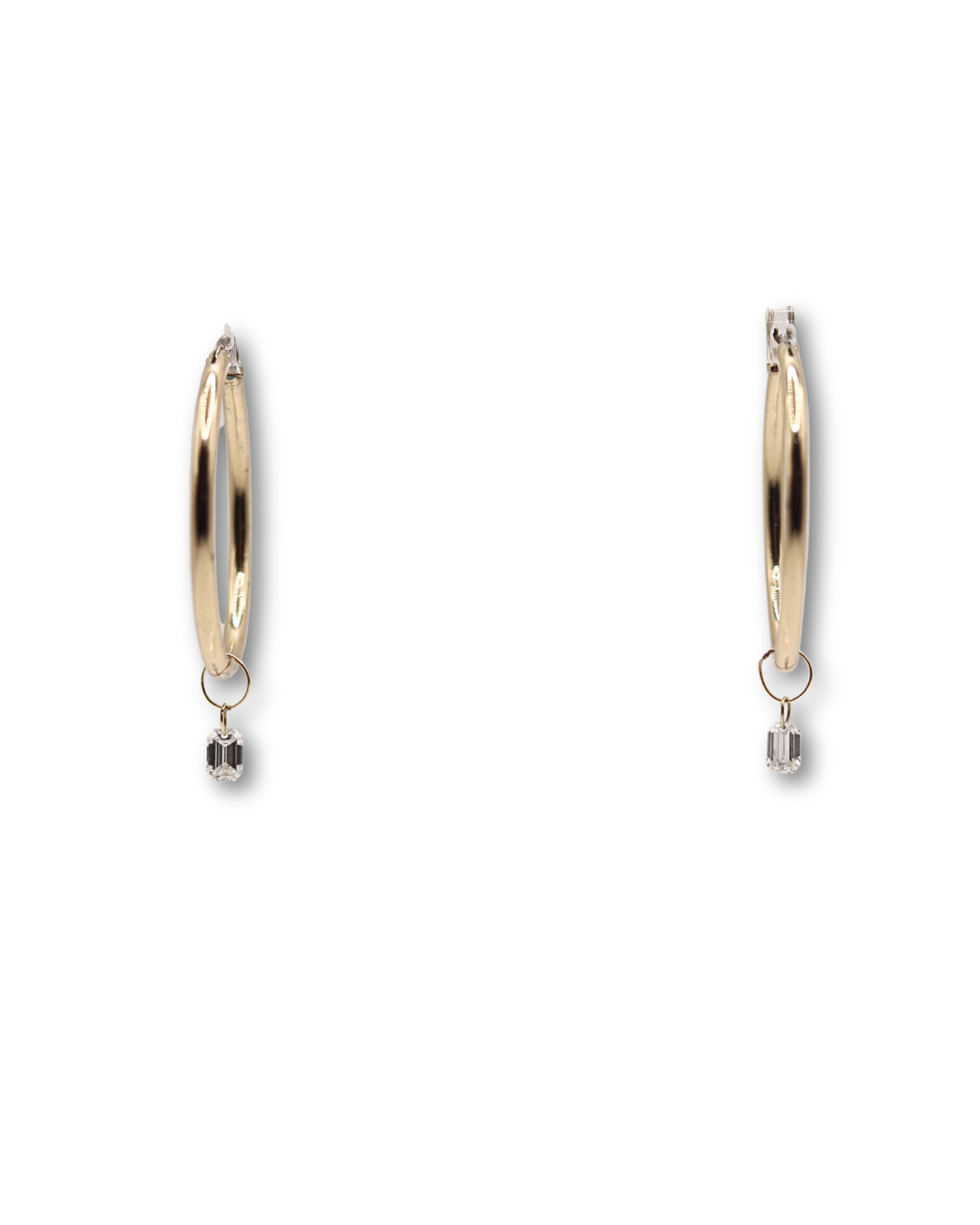
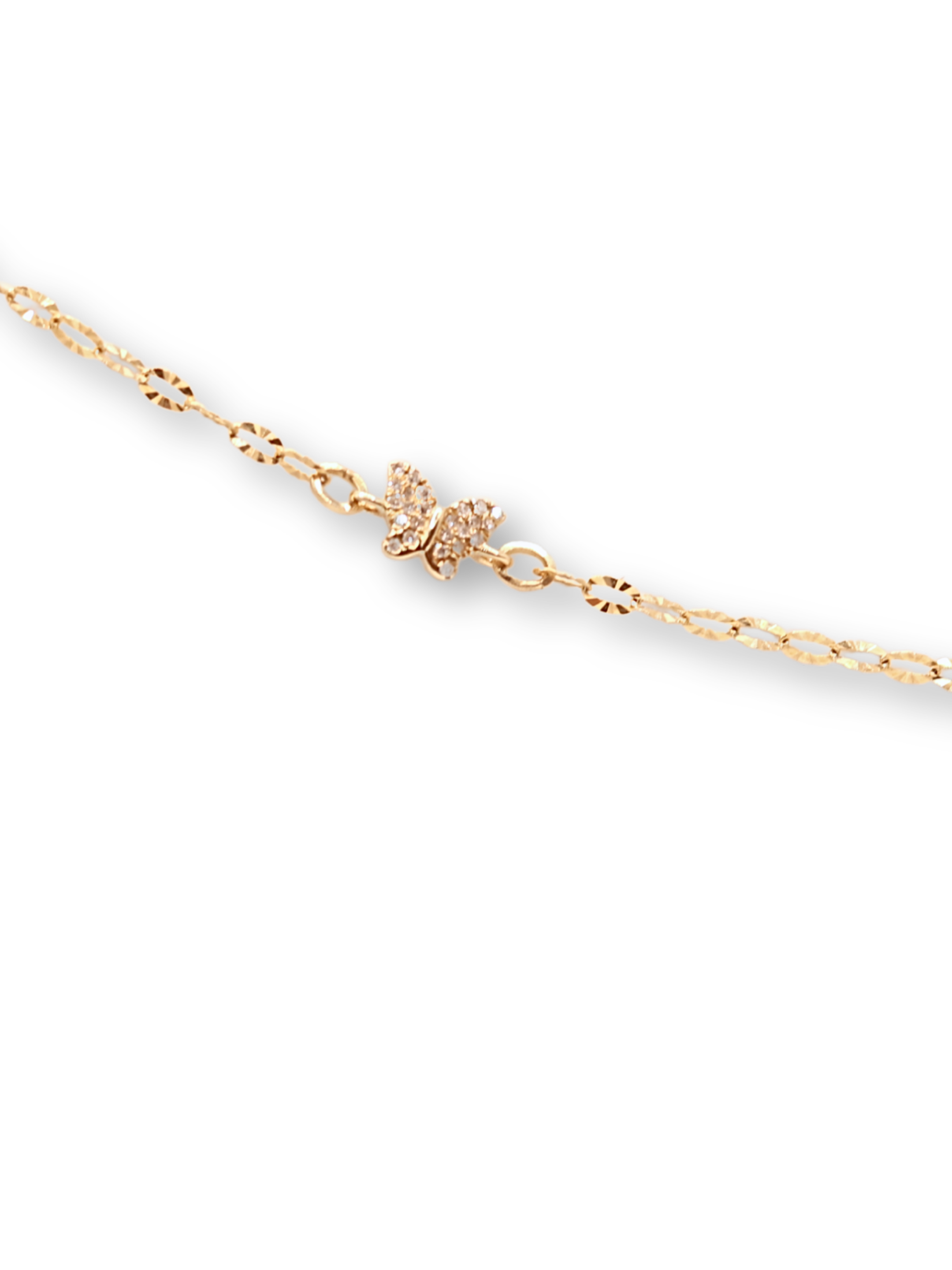
 Image 1 of 4
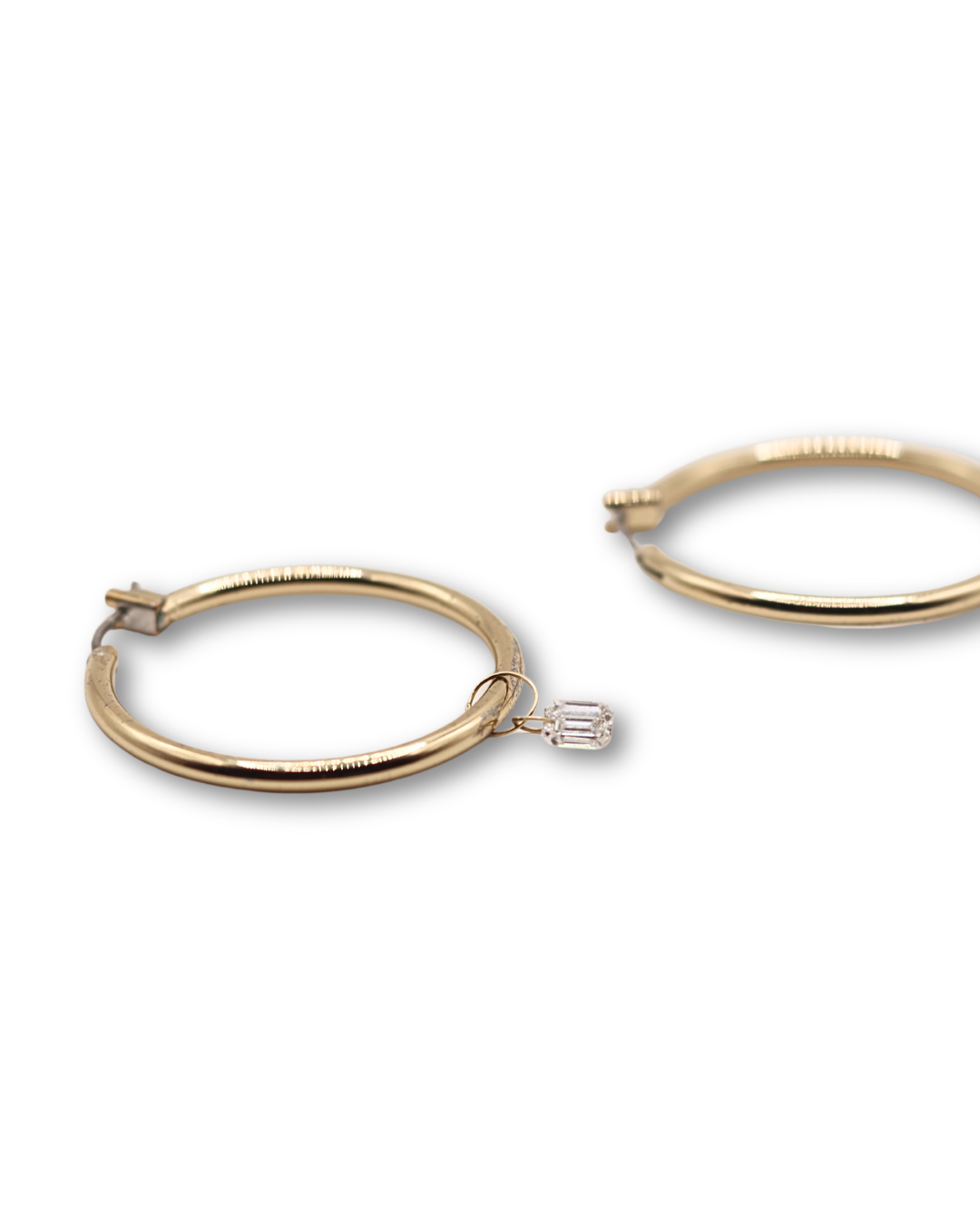
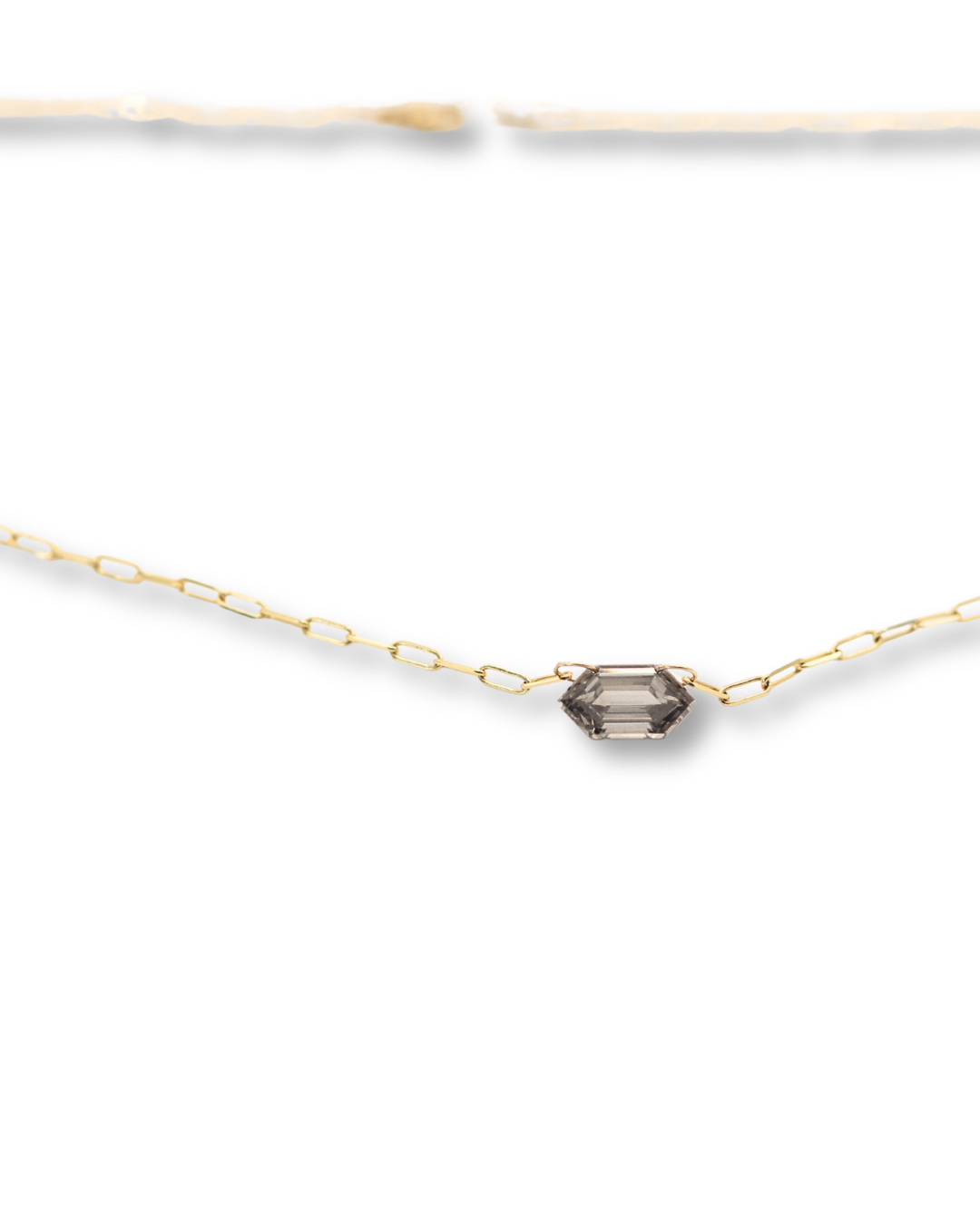 Image 2 of 4
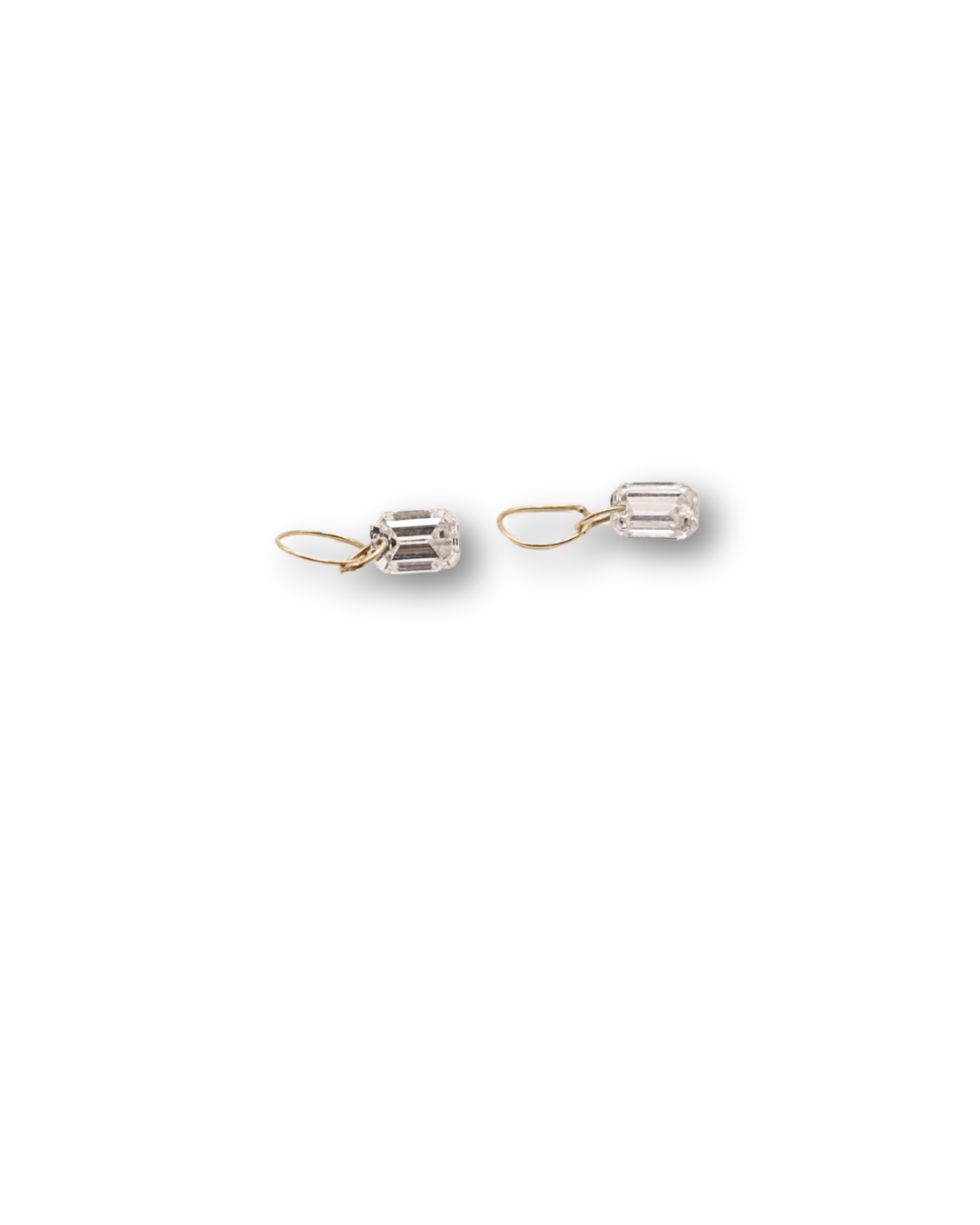
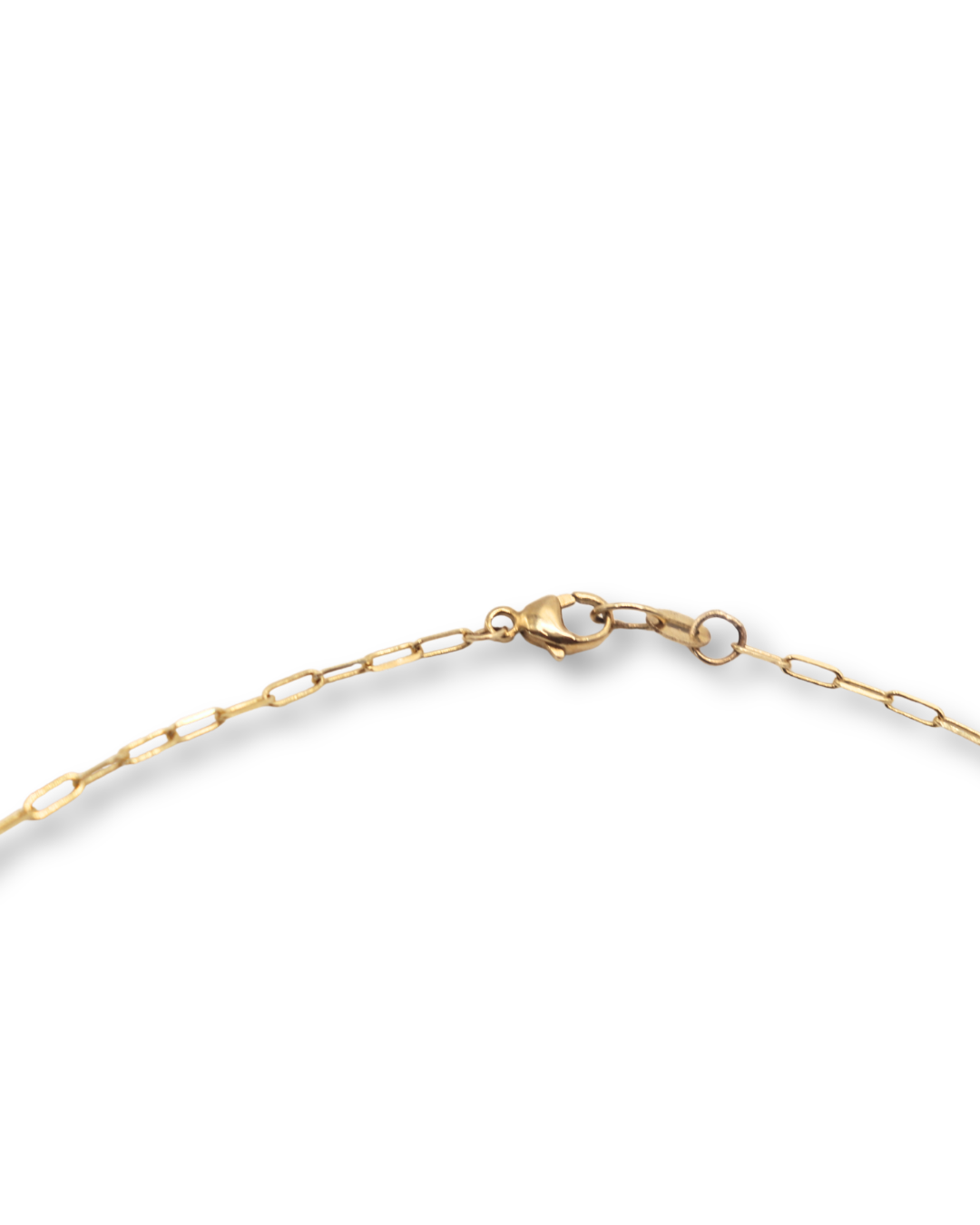 Image 3 of 4
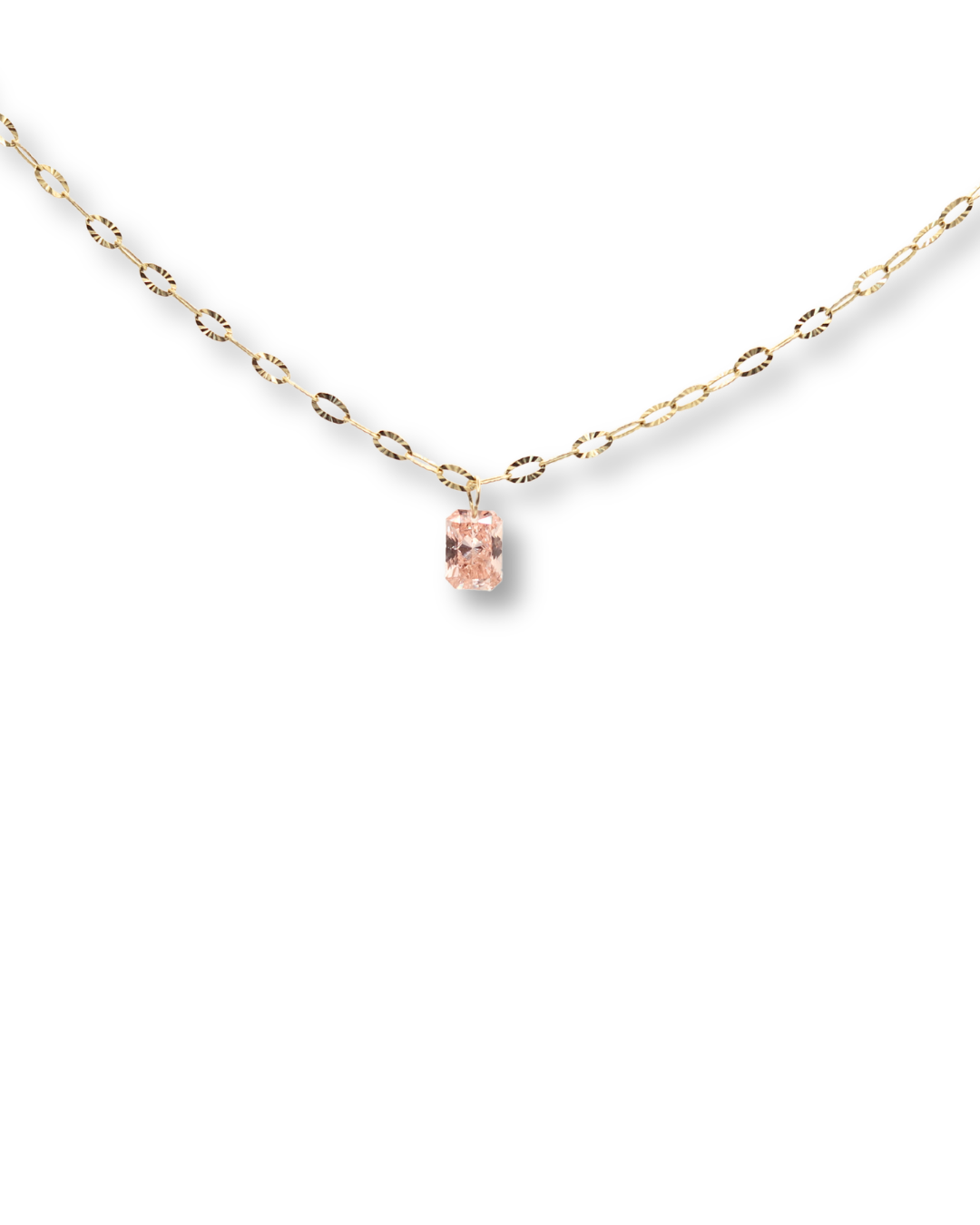
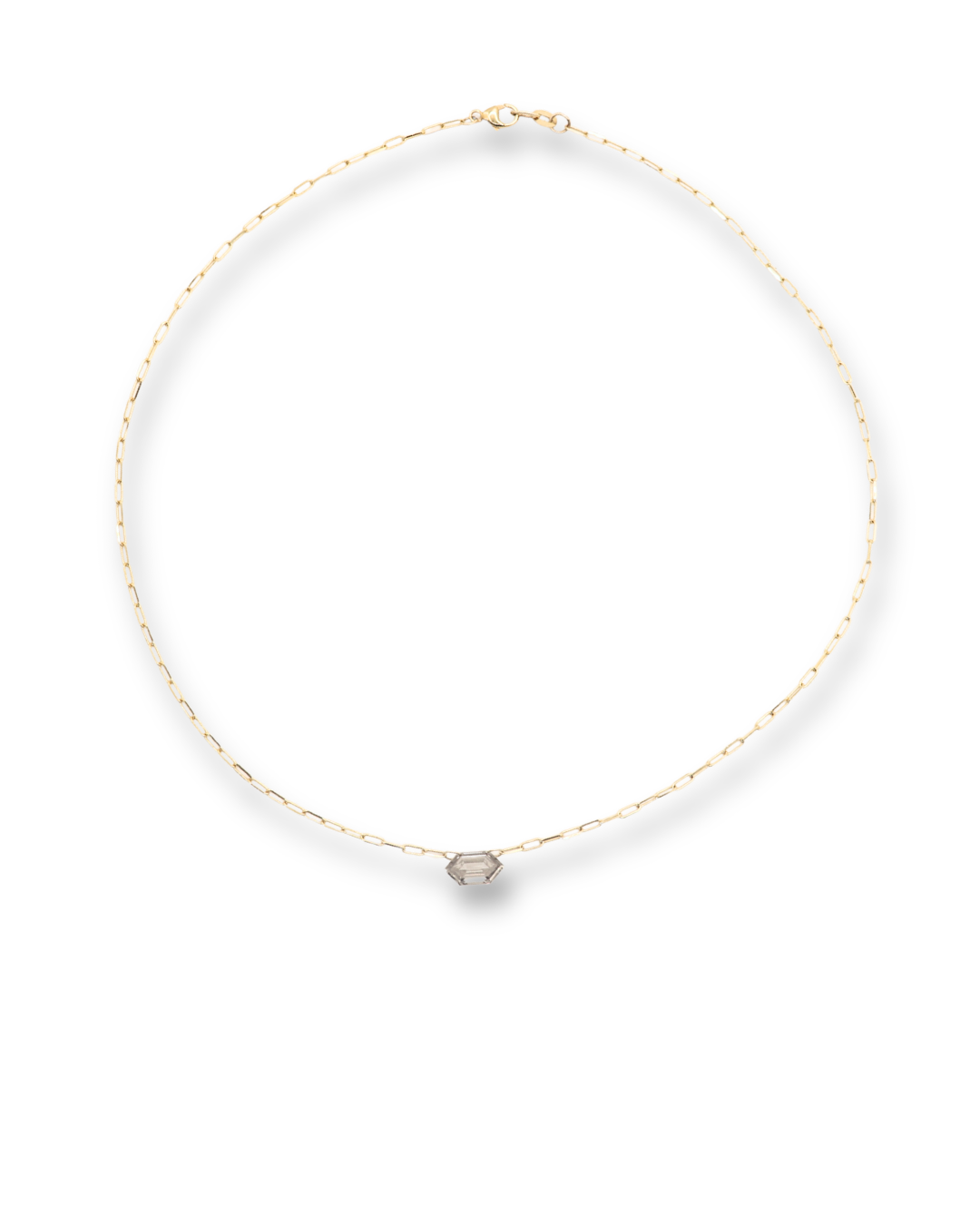 Image 4 of 4
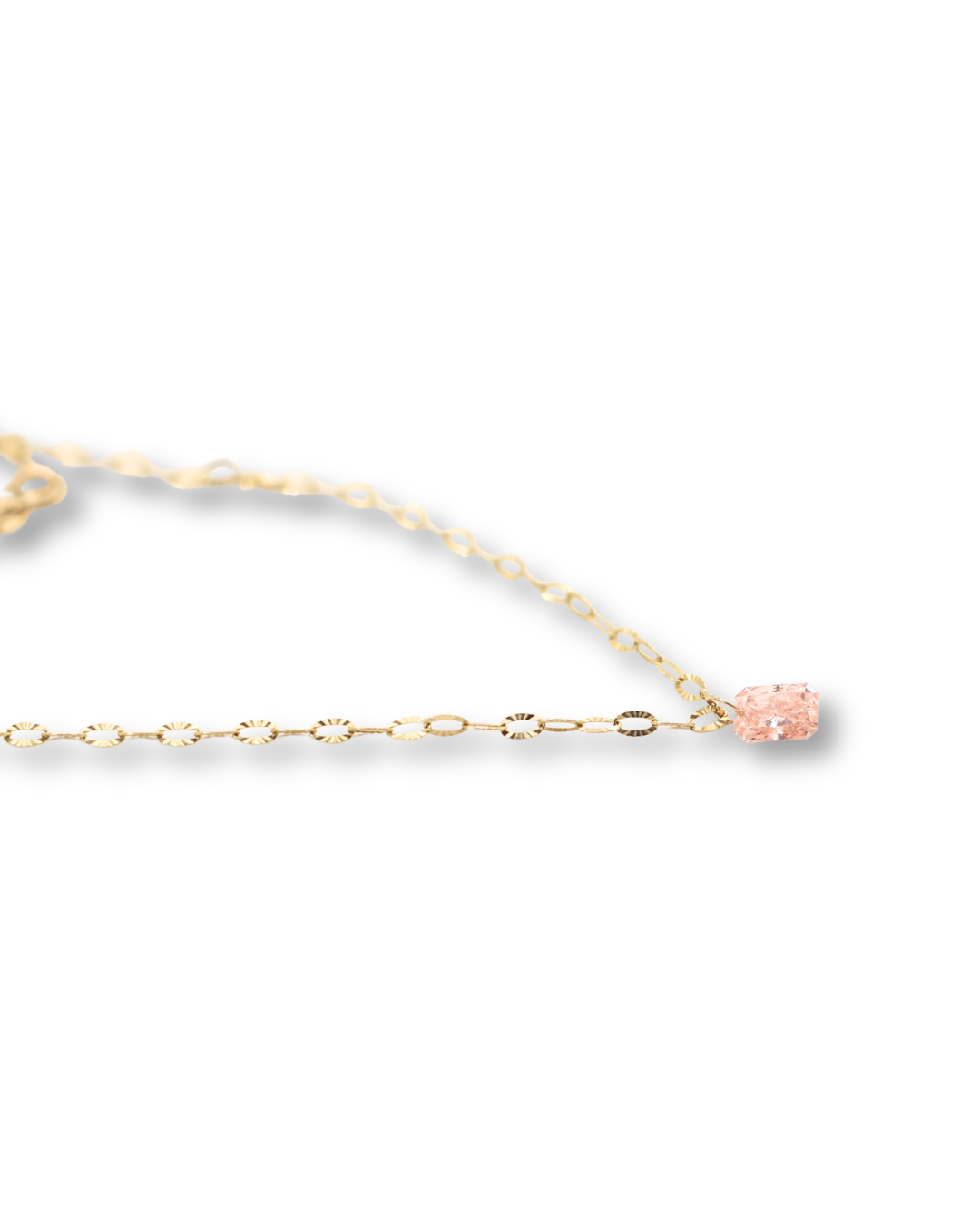
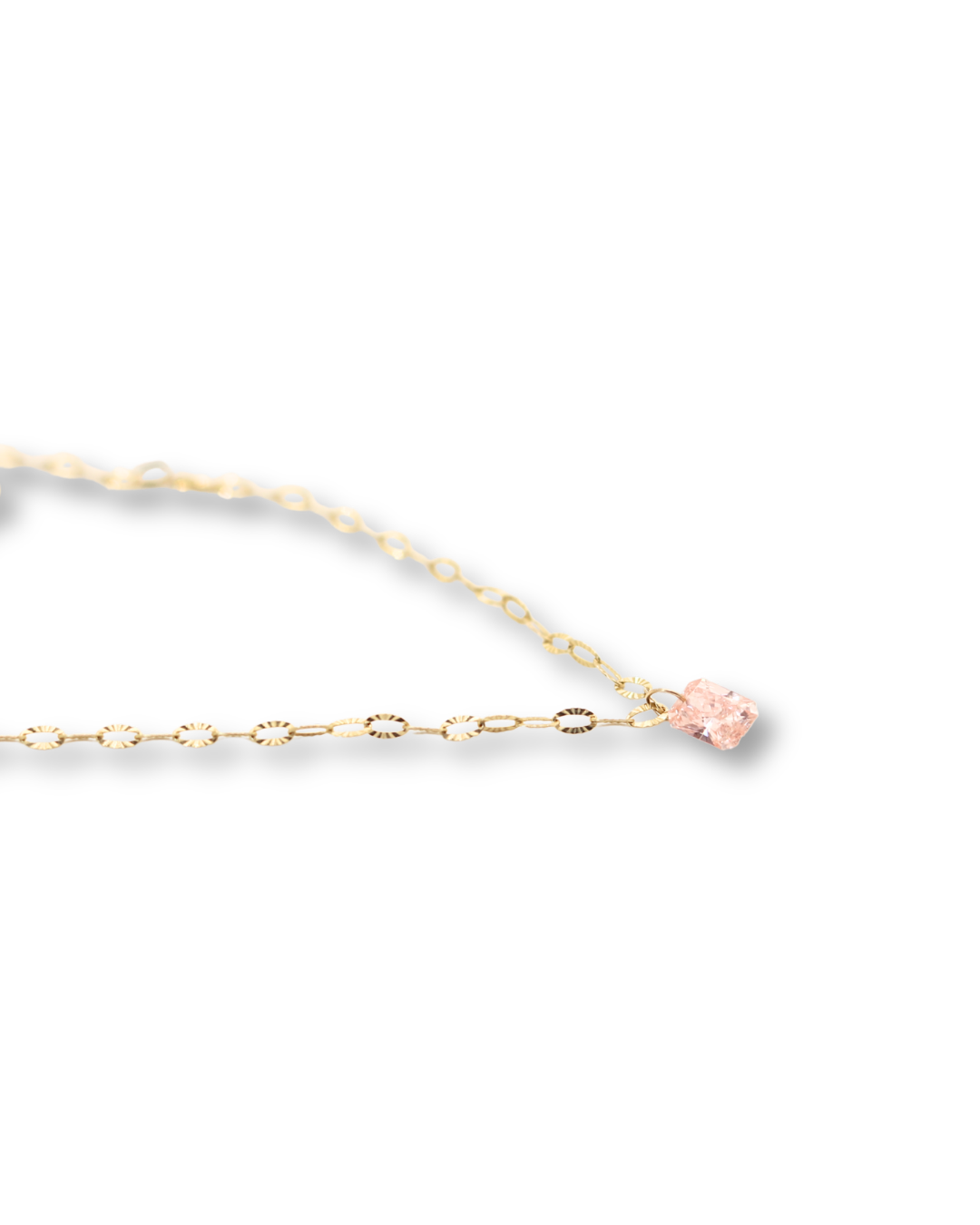
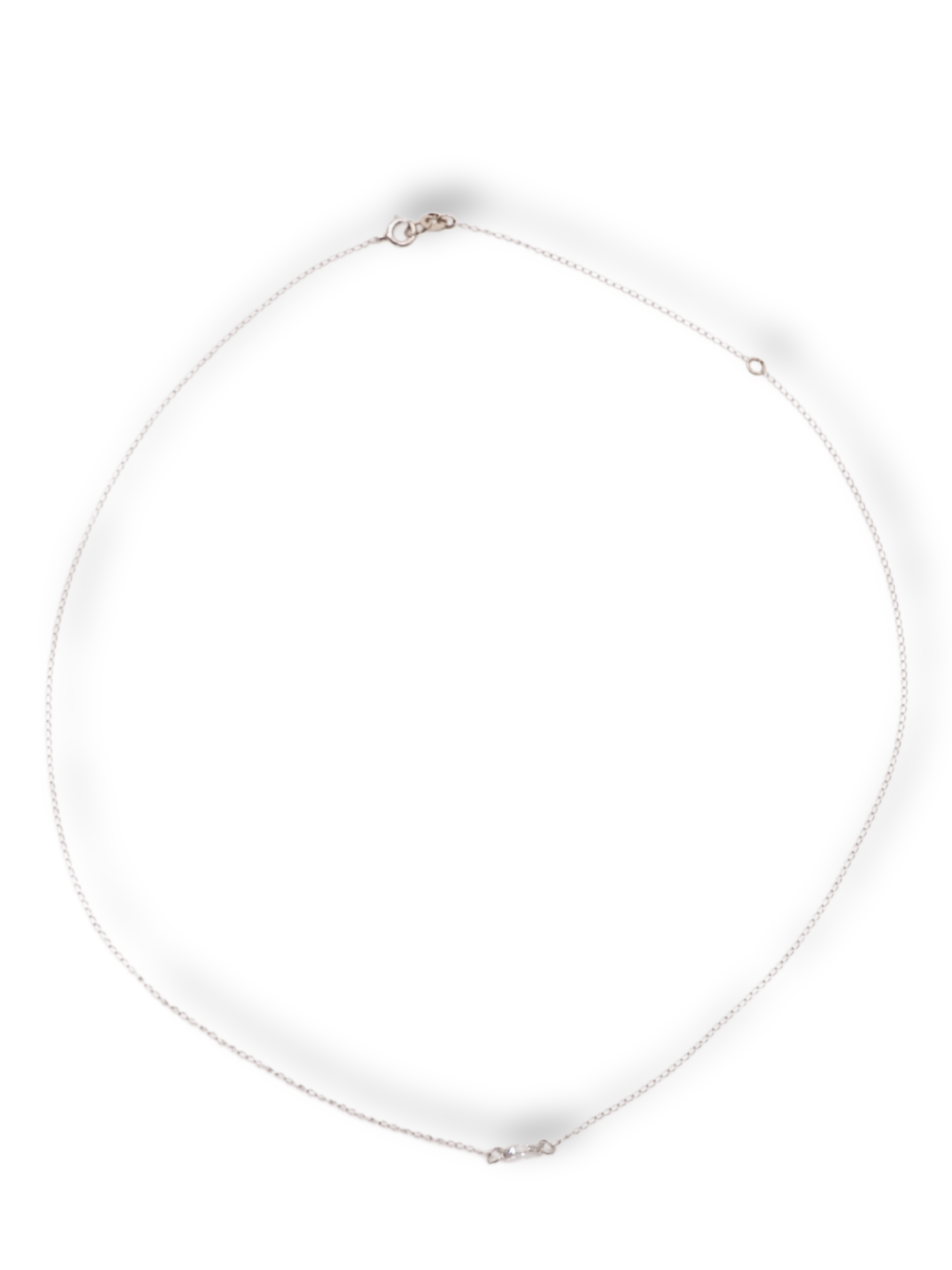
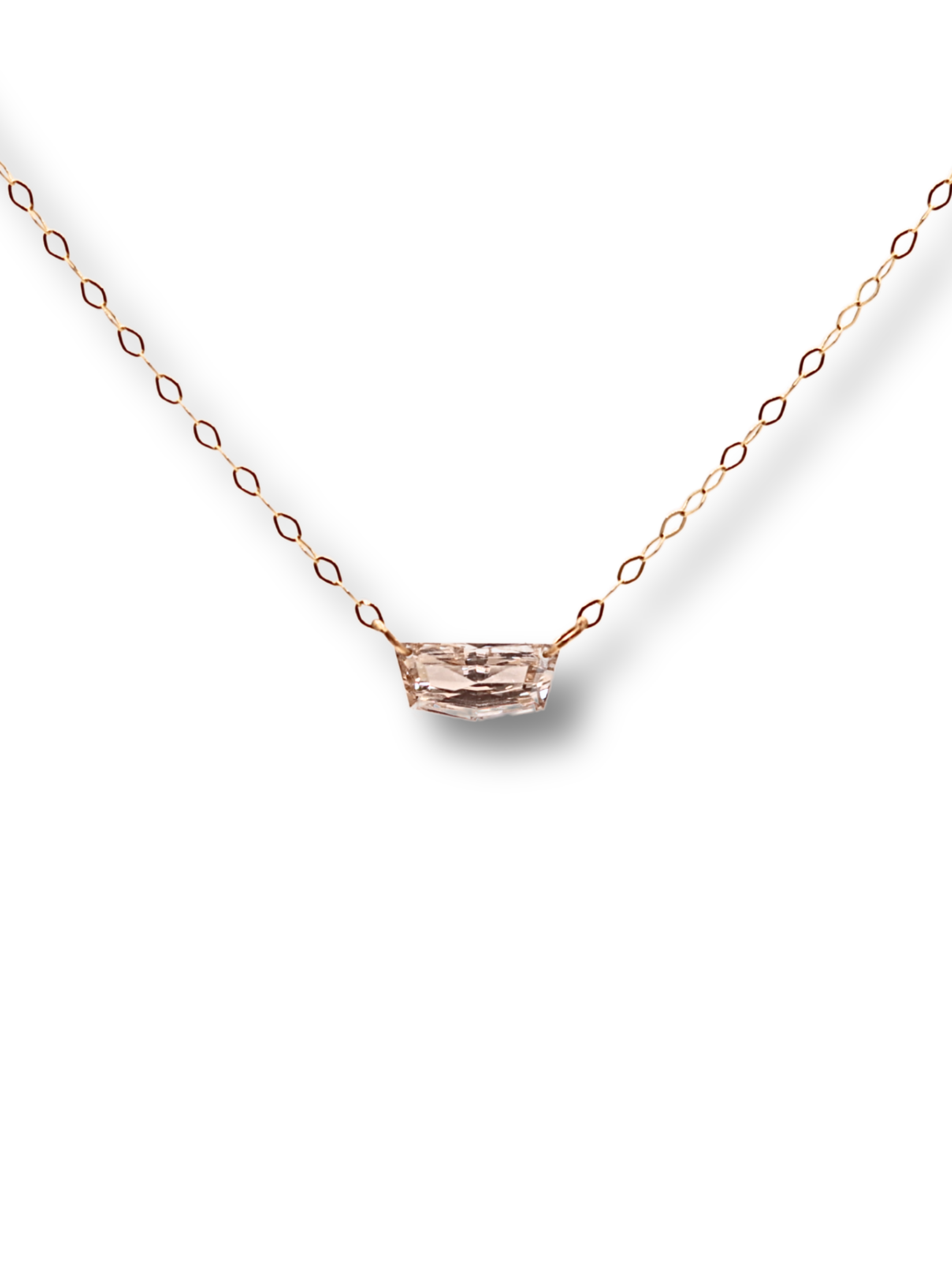
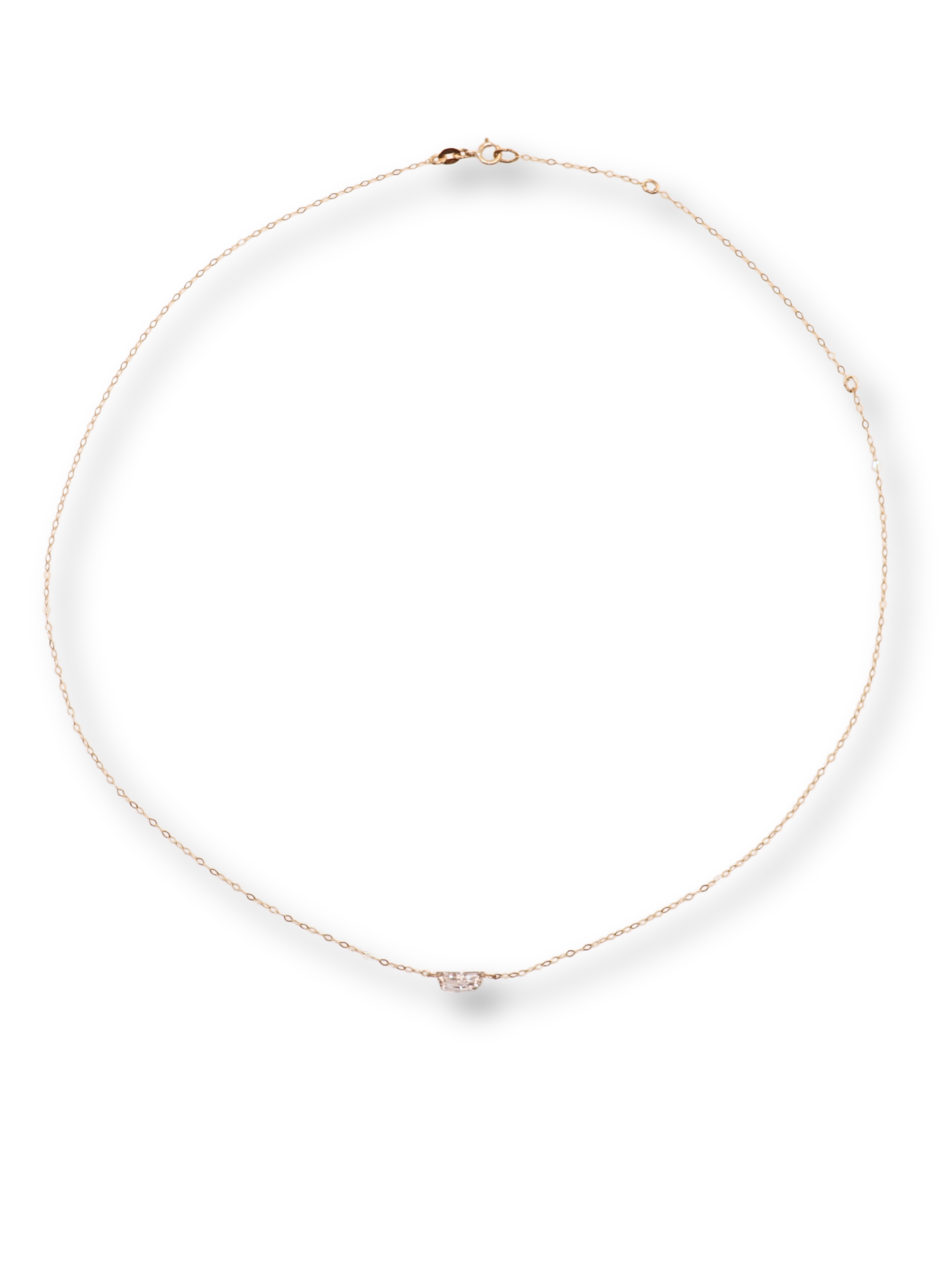
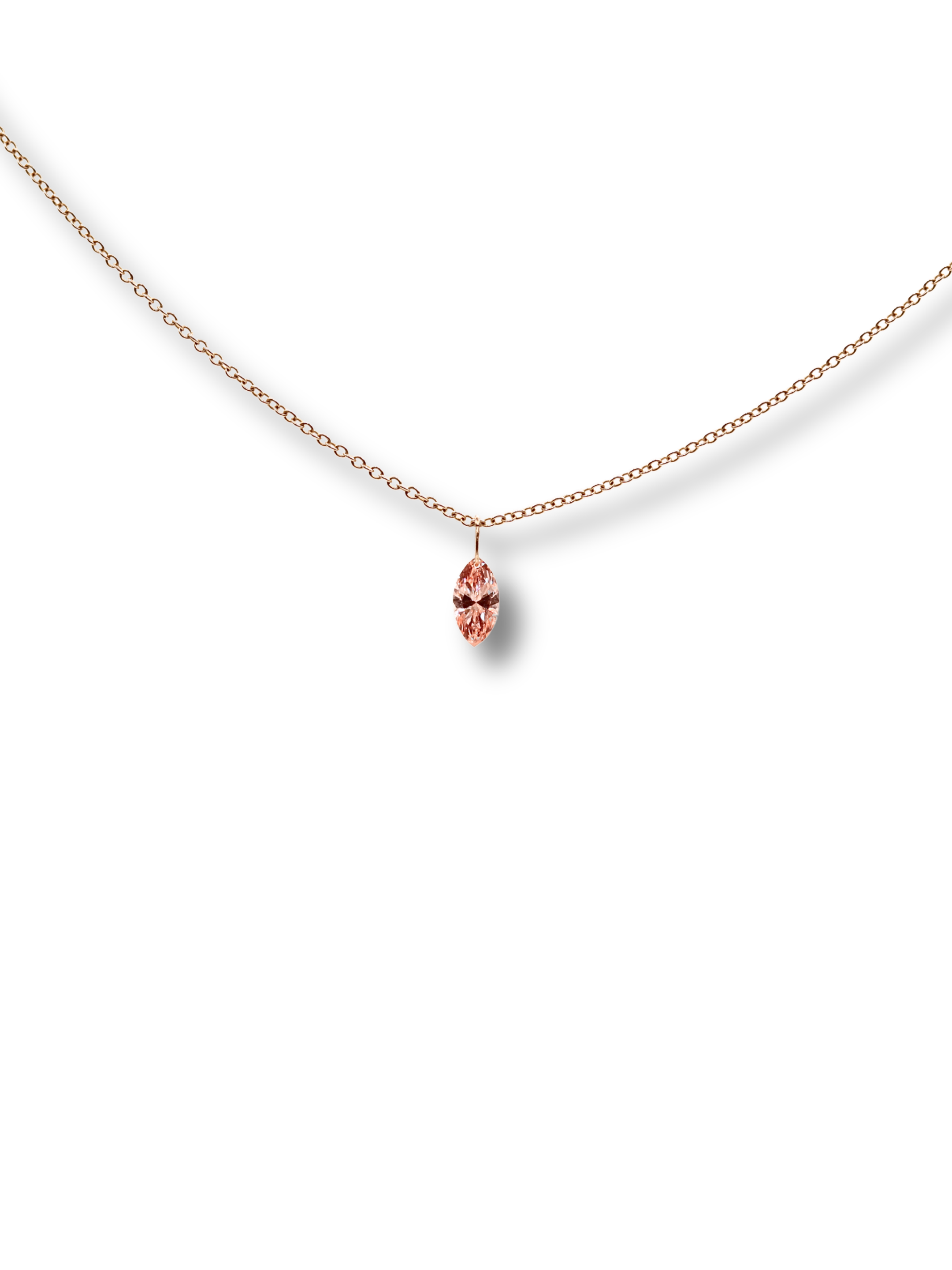
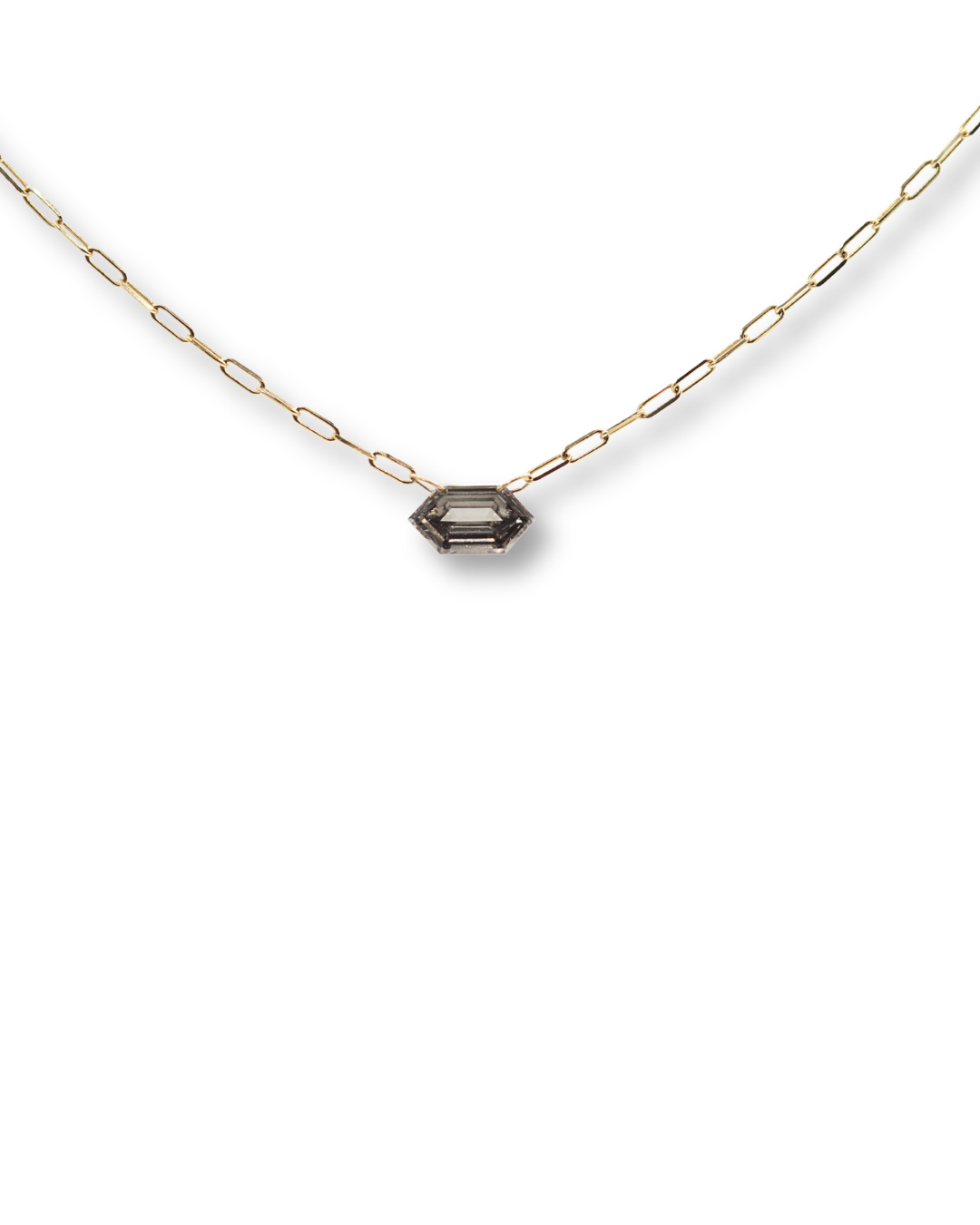
Graded K color with VS1 clarity, this diamond carries a warm, honeyed tone that pairs beautifully with the solid 14K yellow gold paperclip chain. The shorter 14-inch length sits high at the collarbone, making it ideal for layering with longer chains or wearing solo as a statement choker.
One of a kind. When this piece sells, it is gone.
The Details
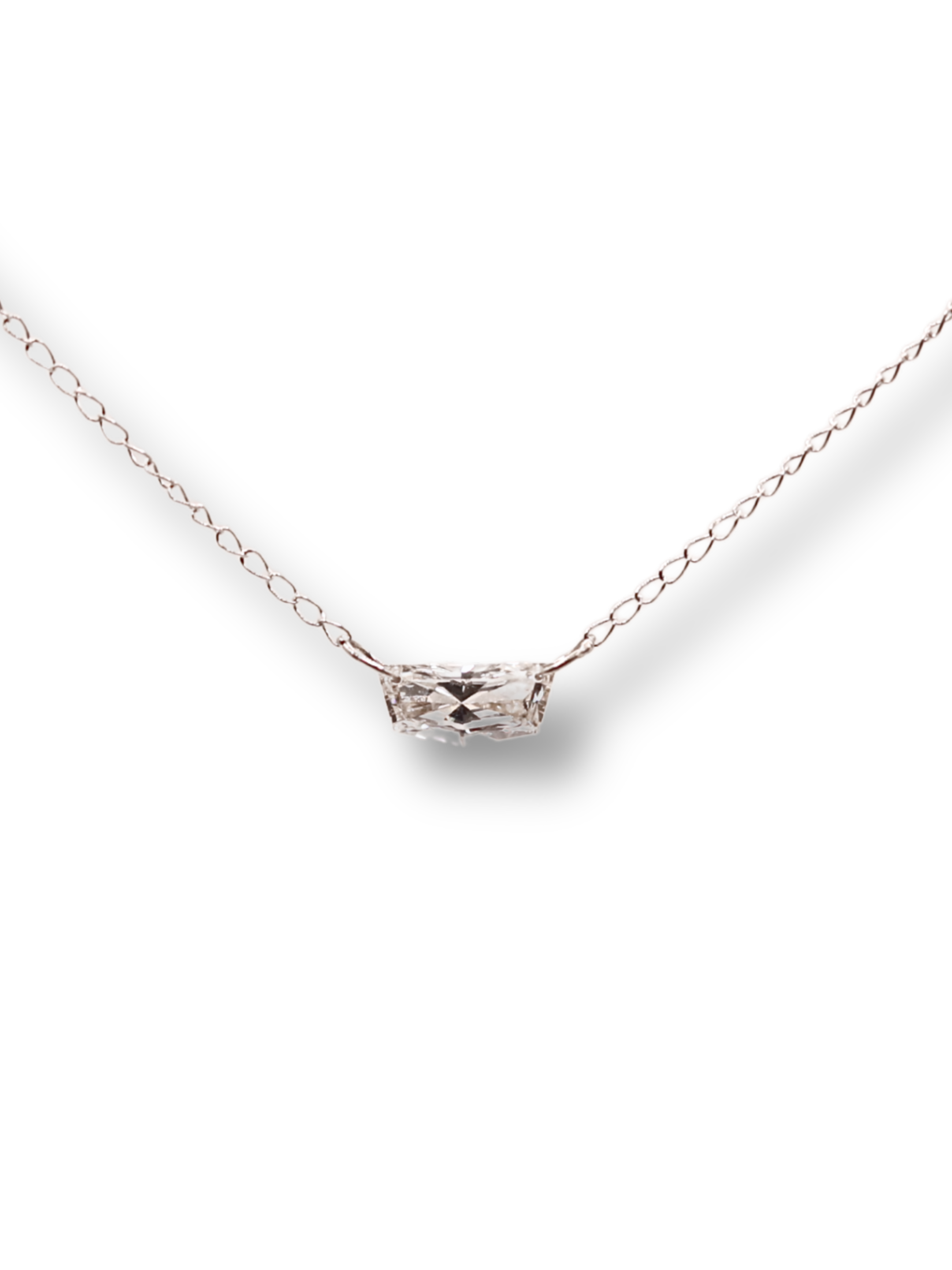
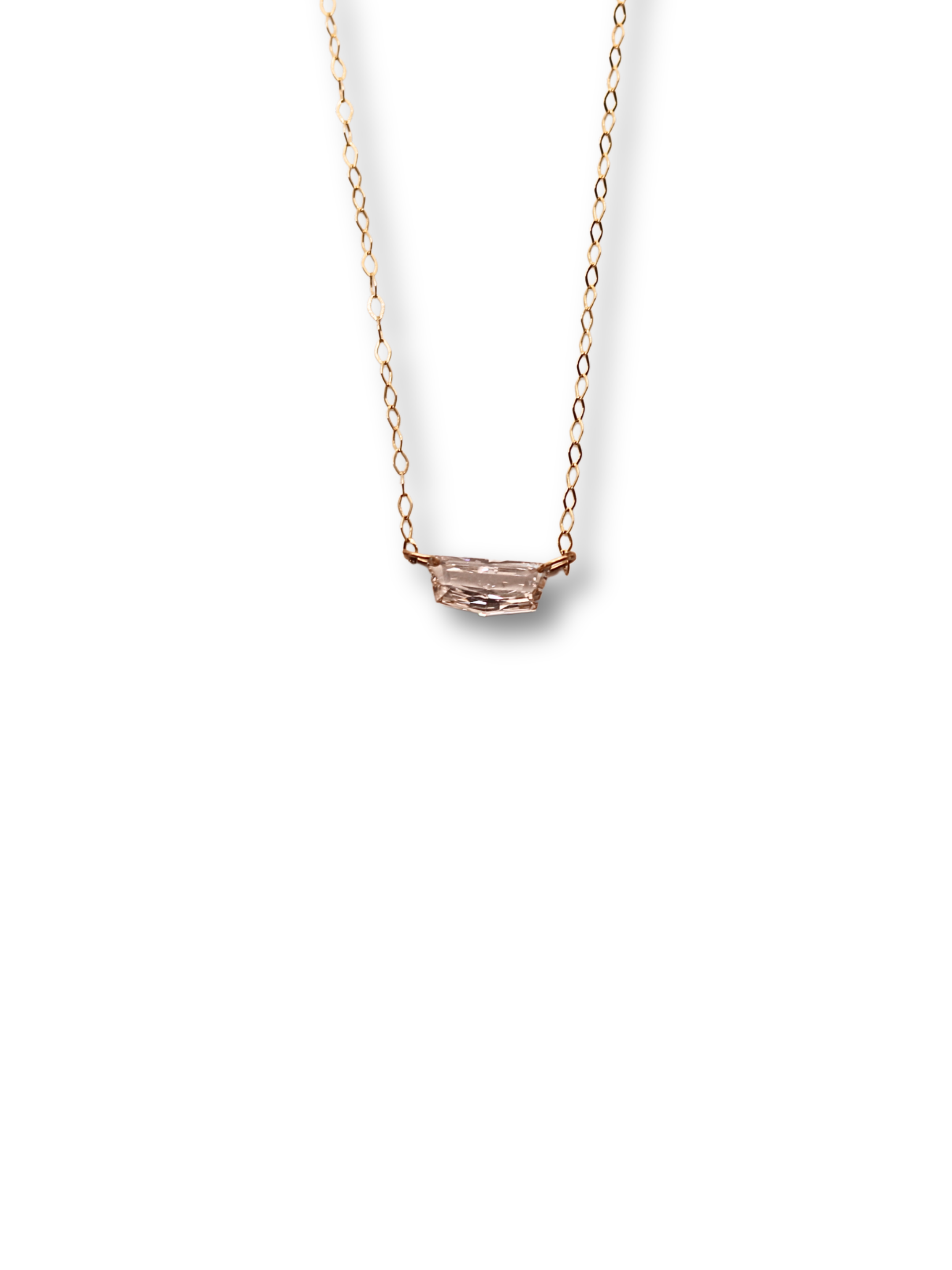
Stone: 1.12ct hexagon-cut lab-grown diamond
Color: K (warm tone)
Clarity: VS1
Measurements: 9.24 x 5.35 x 2mm
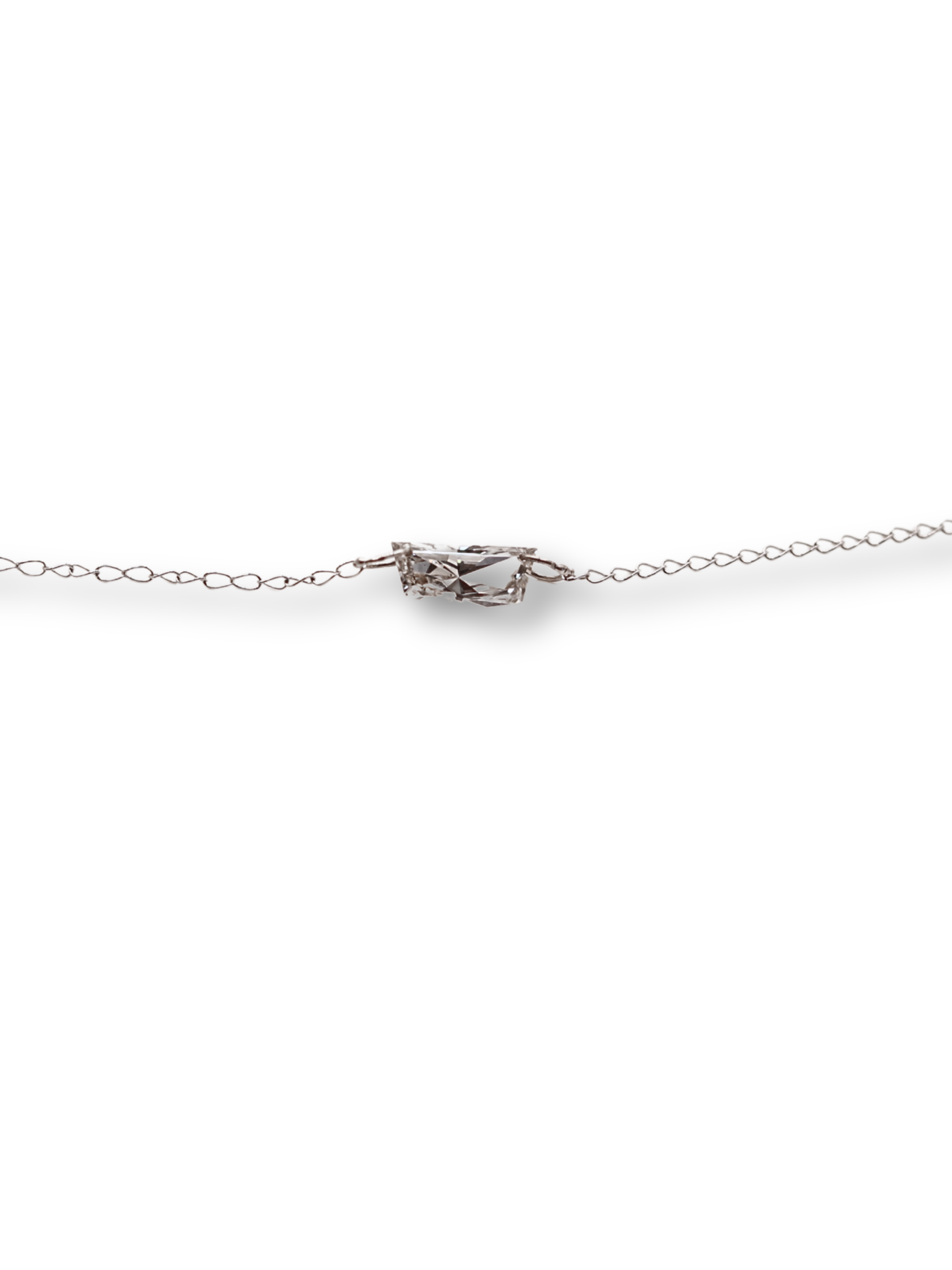
Orientation: East-west (double drilled)
Metal: Solid 14K yellow gold
Chain: Standard paperclip chain, 14 inches
Total weight: 1.71 grams
Sold as: Complete choker necklace
One of a kind
Why Floating?
Traditional diamond settings use prongs, bezels, or channels to hold a stone in place. They work — but they also cover part of the diamond, block light from entering certain angles, and add visual weight to the piece.
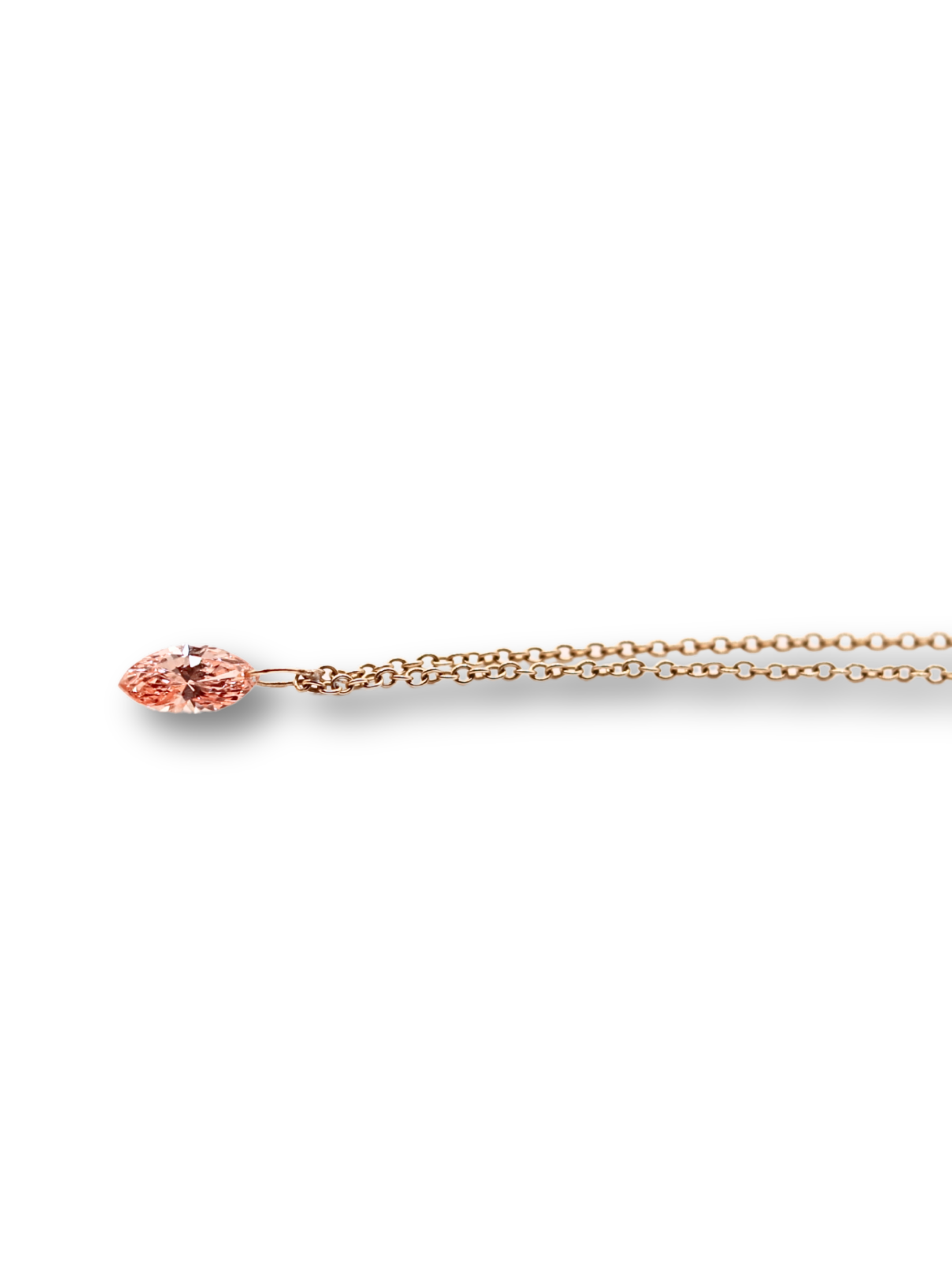
A floating diamond is different. We precision-drill a hole through the center of each lab-grown diamond in our studio, then thread it onto a 14K solid gold jump ring. The diamond hangs freely — no prongs, no bezel, no metal touching the stone's surface. Light enters from every direction. The stone turns and moves as you move. The result is a diamond that looks larger, brighter, and more alive than the same stone in a traditional setting.
Every floating diamond is drilled by hand. It is a process that requires patience, precision, and a deep understanding of how diamonds behave under pressure. Not every stone survives the drill. The ones that do become something entirely new.